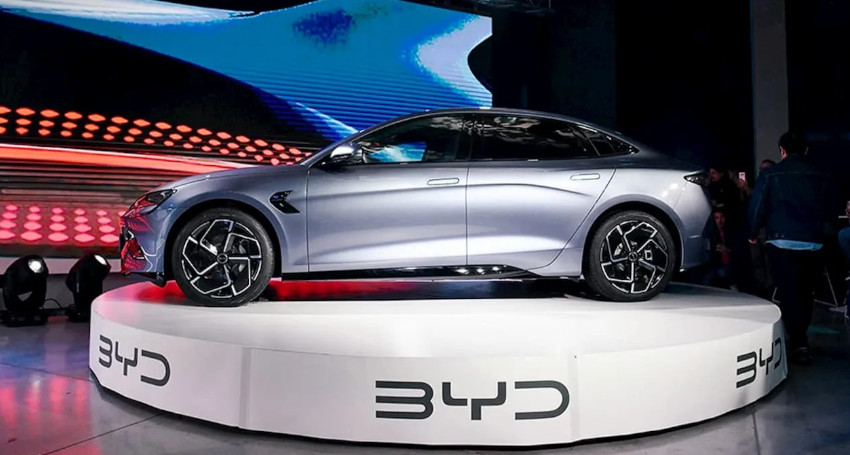
BYD has introduced the 2025 Seal EV, a strong contender to Tesla’s Model 3, with new features and design updates.
New 2025 Seal EV Launch
Following the release of the budget-friendly Seal EV Honor Edition at $25,000 (179,800 yuan) in March, BYD unveiled the 2025 model on Friday.
The Seal EV is BYD’s answer to the Tesla Model 3, offering a stylish, fully electric sedan. The car features an X-shaped front-end design that BYD describes as a “true masterpiece.”
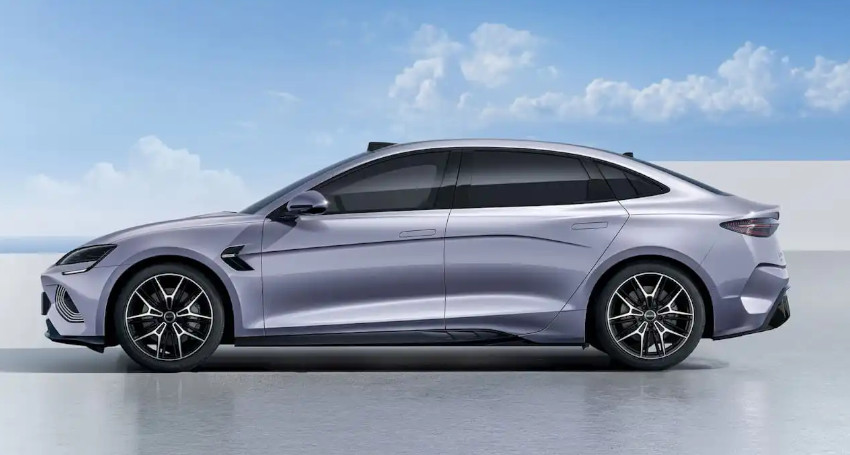
The first images of the 2025 Seal EV showcase a new “Sky Purple” color, described as “fashionable and elegant.”
Key New Features
A significant update is the addition of LiDAR on the roof, sourced from Robosense, a top LiDAR provider backed by BYD. This addition is expected to enhance the Seal’s ADAS capabilities as BYD advances its smart driving technology.
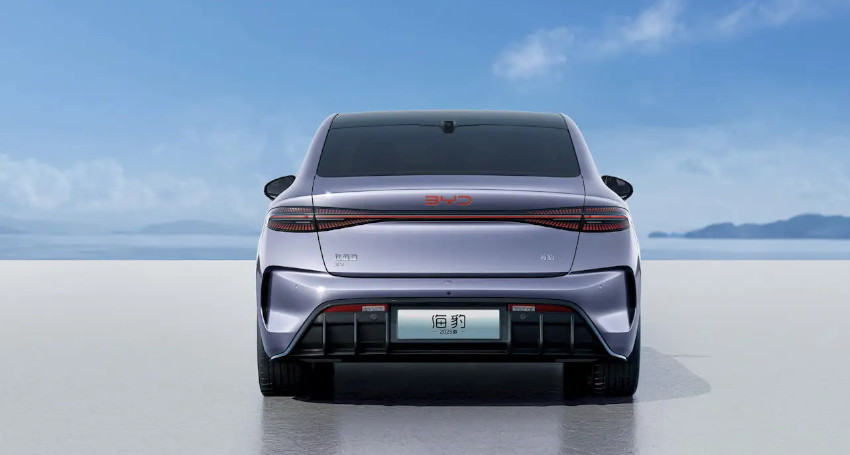
The car also features a bold, red “BYD” logo on the back, replacing the former “Build Your Dreams” badge.
Comparing with Tesla Model 3
In China, Tesla’s Model 3 boasts a range of up to 443 miles (713 km) CLTC with the Long-Range AWD model, priced at approximately $37,800 (271,900 yuan). The base Model 3 RWD starts at $32,300 (231,900 yuan) with a range of up to 377 miles (606 km) CLTC.
Pricing for the new Seal EV has not yet been disclosed but is expected to start around $25,000 (179,800 yuan), similar to the Honor Edition model.
This launch follows Tesla’s rollout of the new Model 3 Performance in China earlier this summer.
Size Comparison with Tesla Model 3
The BYD Seal measures 4,800 mm in length, 1,875 mm in width, and 1,460 mm in height, with a wheelbase of 2,920 mm. These dimensions are comparable to Tesla’s Model 3, which is 4,720 mm long, 1,933 mm wide, and 1,411 mm tall.
Built on BYD’s new e-Platform 3.0, the Seal EV offers a range of up to 404 miles (650 km) CLTC with its larger 80.64 kWh battery. Two battery options are available: 61.44 kWh and 80.64 kWh, providing ranges from 317 mi (510 km) to 404 miles (650 km) CLTC.
Interior and Future Plans
The BYD Seal EV interior was also showcased. The new model is set to launch in China on August 8, 2024. Further details will be available next week.


Market Impact and Future Innovations
BYD sold over 342,000 new energy vehicles last month despite a dip in EV sales for two consecutive months. The new Seal EV could help boost sales with its advanced ADAS features, catering to the increasing demand for smart technology in China.
After securing a deal with Uber to deploy 100,000 EVs globally, BYD also plans to collaborate on autonomous driving technology. Elon Musk commented on this via X (formerly Twitter), suggesting that “BYD needs to change course fast, or they’re in trouble.”
Despite previous skepticism from BYD about fully autonomous driving, the company introduced its XUANJI Architecture earlier this year. BYD aims to lead in vehicular intelligence and accelerate automotive industry advancements.
BYD claims to be a leader in L2-Level intelligent driving deployment in China and was the first brand to receive an L3-level test license. The company is investing $14 billion (RMB 100 billion) in intelligent driving technology to offer advanced features at a lower cost globally. The new Seal EV is expected to be a crucial part of this strategy.
Sources: CarNewsChina, BYD